
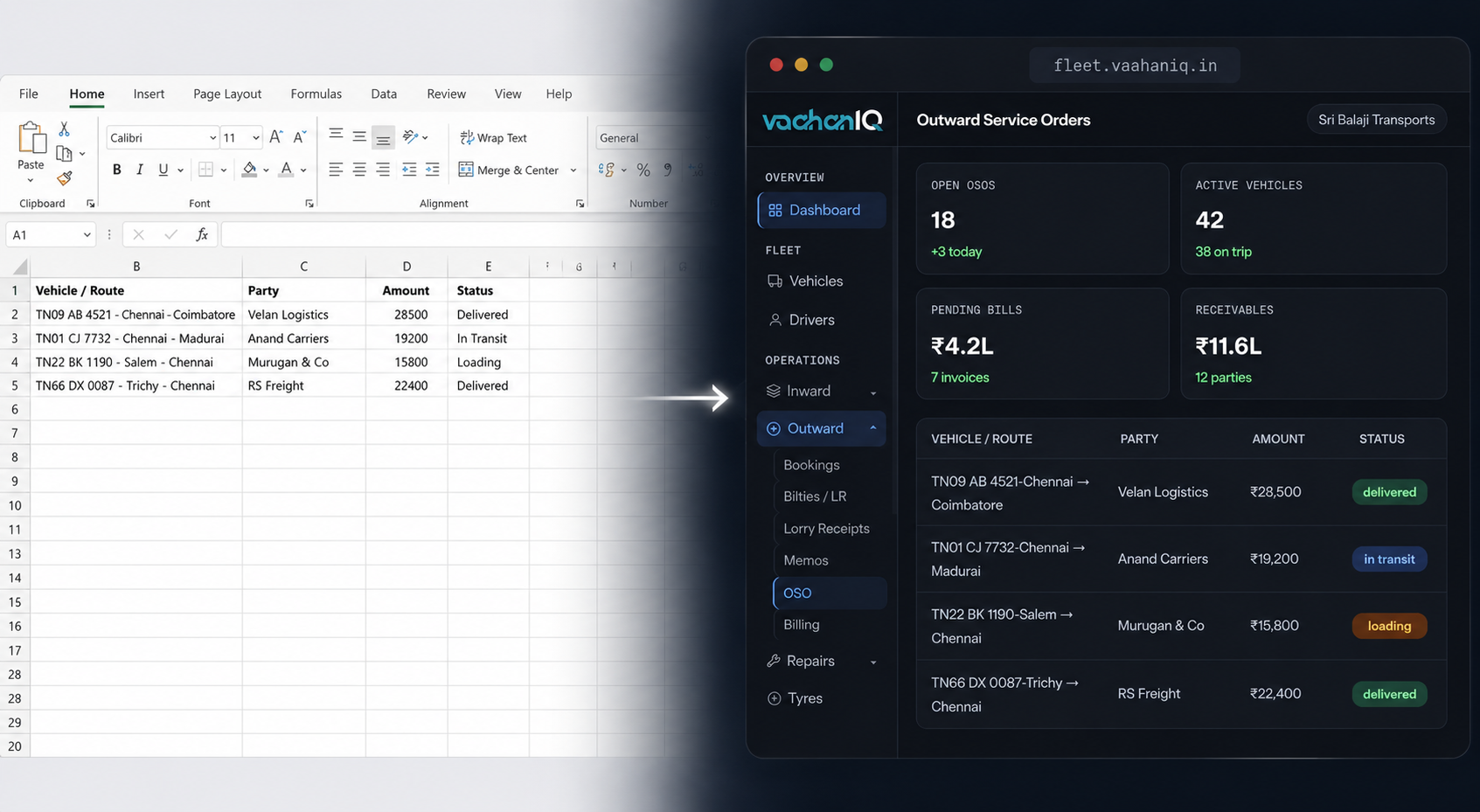
At 3 trucks, a spreadsheet is fine. One person tracks everything, remembers most of it anyway, and catches mistakes just by looking at the sheet. At 15 trucks, something changes — not because Excel got worse, but because the amount of coordination it's quietly being asked to do outgrows what one person can hold in their head.
We've watched this happen with more than one transport business, and the pattern is almost always the same.
What actually breaks first
It's rarely one dramatic failure. It's a slow accumulation of small ones:
- Two people update the same trip sheet at different times, and one version silently overwrites the other
- A driver's vehicle assignment gets typed wrong once, and nobody notices until a bill goes out for the wrong truck
- Freight numbers get copied from one sheet to another for billing, and a typo turns into a real financial gap
- A repair or tyre expense gets logged in someone's notebook, never makes it into the sheet, and quietly disappears from the business's actual costs
None of these look serious on their own. At 3 trucks, one person can catch and fix them before they matter. At 15, the same person is now trying to hold 15 moving trips, 15 sets of billing details, and a growing list of maintenance records in their head at once — and something eventually slips through.
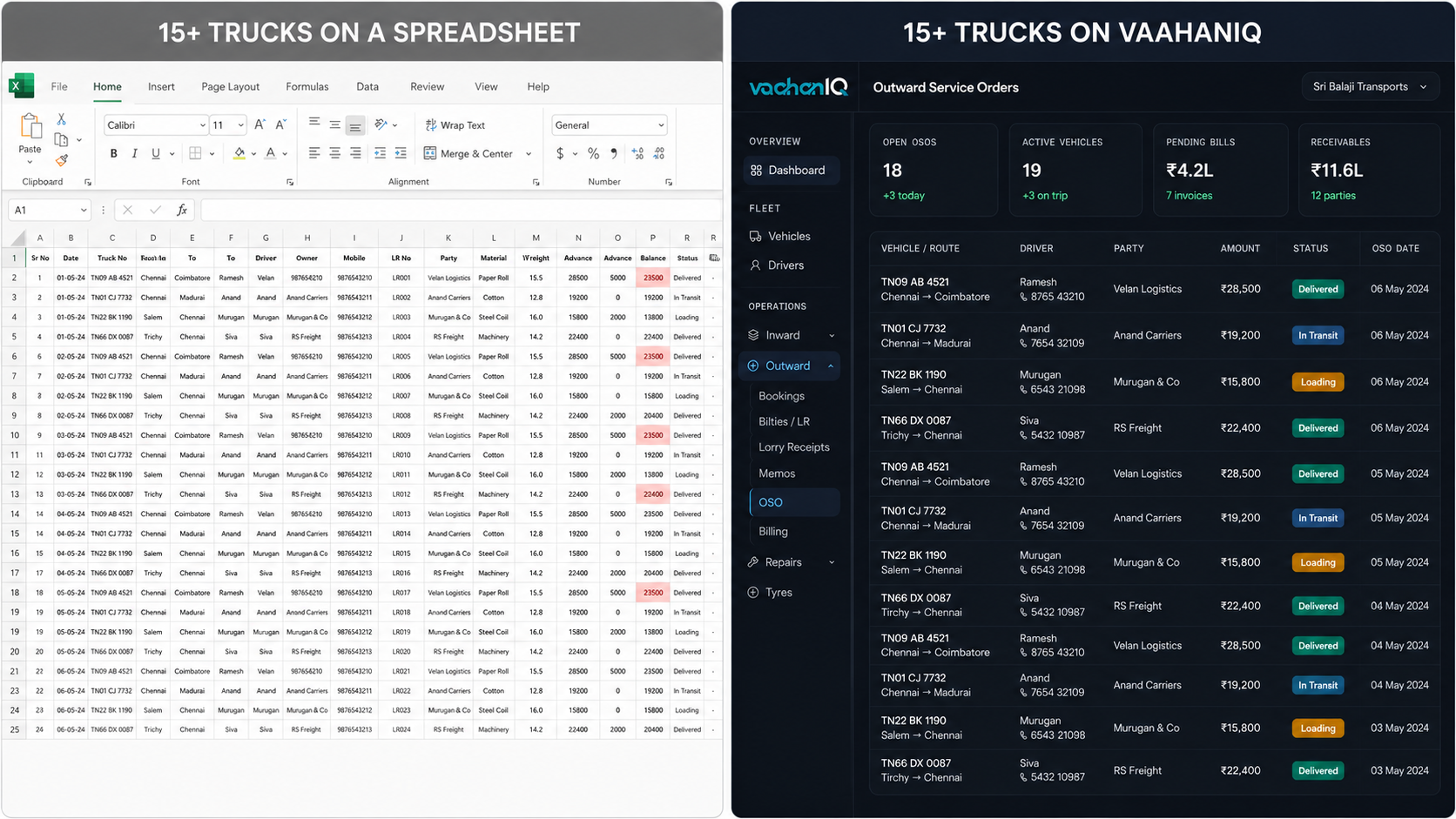
Why 15 specifically
There's nothing magic about the number — it's less about the truck count itself and more about how many things are in motion on a given day. Around that size, a fleet usually has multiple trips overlapping, multiple drivers to track, and billing that no longer maps cleanly to a single sheet. That's the point where a spreadsheet stops being a source of truth and starts being a place where the truth quietly diverges from what's actually happening on the road.
What changes with a system built for it
This is the actual argument for VaahanIQ over a spreadsheet — not that Excel is bad, but that past a certain size, the coordination cost of keeping everyone looking at the same accurate numbers becomes real money. An Outward Service Order carries the trip, the billing, and the status in one place instead of five. Repairs, tyres, and inventory tie into the same accounts instead of sitting in a separate notebook. Nobody has to remember to update three different places to keep the truth consistent — because there's only one place to update.
If you're still comfortably managing your fleet on a spreadsheet, that's not a problem to fix. If you're starting to notice the small slips — a missed bill, a mismatched trip, a maintenance cost nobody can quite account for — that's usually the actual signal, well before the truck count is the reason.